
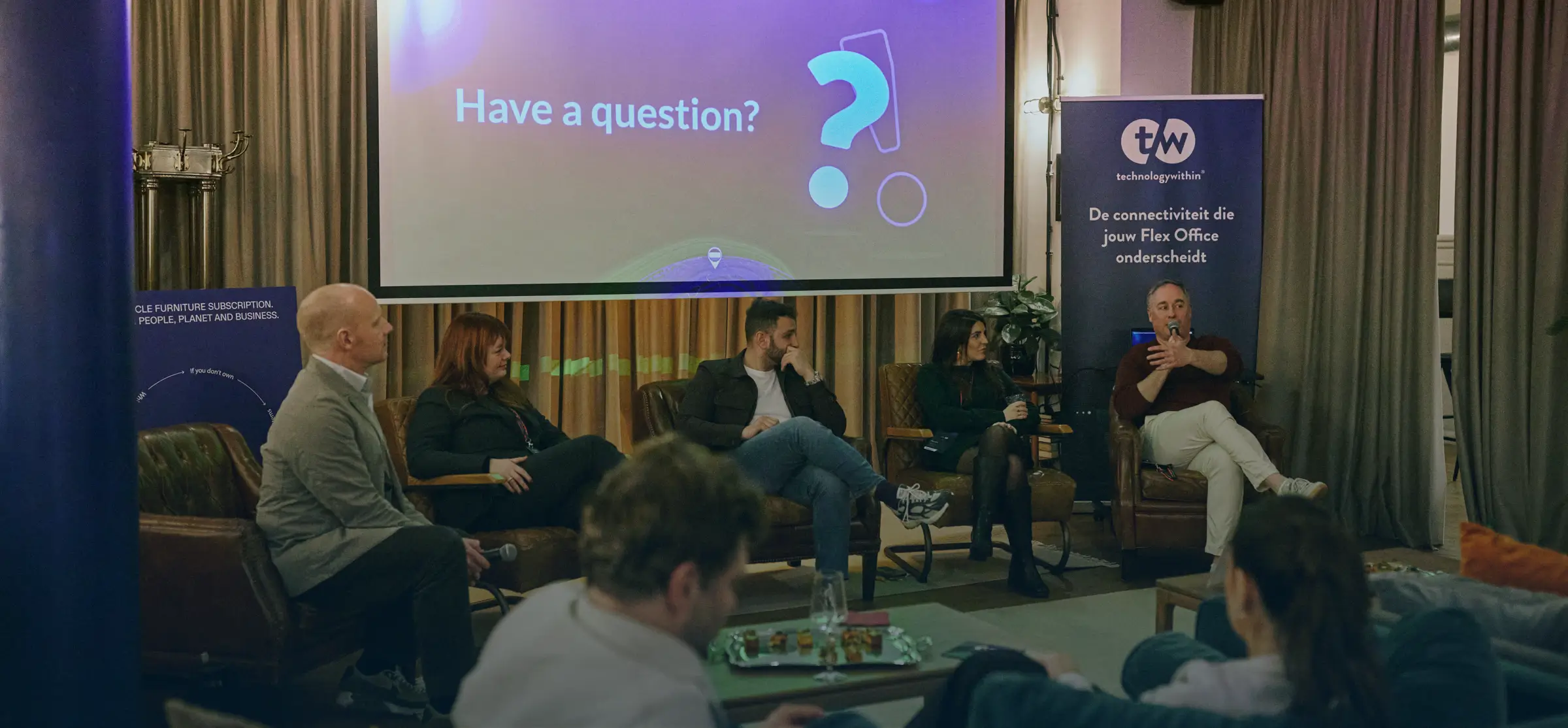

Amsterdam is a fast-growing flex market. With strong ties to the UK and an internationally diverse talent pool, the Dutch capital is an attractive destination for companies, driving demand for flexible office space. For operators looking to expand here, the real question is: what does it take to succeed?
In a conversation moderated by Samuel Warren, Sales & Marketing Director, UK & Europe, at technologywithin, the following workplace experts shared their views:
Maudy Westerveld, Director – EBC Amsterdam
Greg Feld-Davidovici, Co-Founder – RIVVIA | Certified B Corp™
Wybo Wijnbergen, Co-founder & CEO – infinitSpace
Elena Soler, Head of Sales, Netherlands – Mindspace
Let’s look at the highlights from their insightful discussion on the battle for coworking success in the Netherlands.
Competition is heating up
In recent years, Amsterdam has welcomed a range of flex operators, from global players to new entrants. Mindspace, the host venue for our event, entered the Dutch market in 2018 and now operates eight locations across the country. Meanwhile, Rivvia opened its first location in Amsterdam in late 2024 and a second site last year.
Amsterdam is “a heated market. Every month, a new competitor is rising up,” comments Maudy Westerveld, sharing a perspective most of the panellists agree with. With EBC being one of the city’s oldest serviced office operators, opening 49 years ago, it has embraced flexibility to respond to new market conditions.
“If you can match design, service, brand, and a sense of lifestyle for your customers…that’s where you’re going to win,” Greg Feld-Davidovici recommends for standing out in a crowded market. He predicts that flex brands on the higher and lower end of the market (Rivvia applies to the former) are best placed. Elena Soler shares Greg’s views on positioning – it can help flex brands find their place in the market. As a boutique operator, Mindspace “wins on service.”
But Wybo Wijnbergen is sceptical that the Amsterdam flex market is saturated, predicting that the impact of AI, politics, and economics on the workforce will increase demand for flex space and supply. There are opportunities in Amsterdam, says Wybo, but he warns of risks, such as pricing challenges between different flex operators. Beyond operates three sites across the city.
Retention rules
Despite cost challenges, long-term success in the Netherlands ultimately comes down to something more fundamental: community and retention – areas the panellists largely agree are frequently underestimated in flex.
Operators who use community as a marketing tool without investing the necessary time and effort risk damaging their brand, explains Elena Soler. Sharing this view, Greg Feld-Davidovici notes that the long-term payoff of genuinely building a community in flex is stronger brand loyalty.
Wybo Wijnbergen reinforces this point, explaining that operational success isn’t measured by portfolio size, but by the revenue it generates, attributed to factors such as space quality, members, and retention. For flex brands, meeting community needs means responding directly to occupier expectations.
Six years ago, Maudy Westerveld saw occupiers requesting phone booths and quiet spaces, but their expectations have since evolved. Likewise, Elena advises operators to provide more meeting and customer spaces, saying, “All spaces need to adapt to the reality of how we work now, which is hybrid.” The bottom line, according to Maudy, is that coworking “is a hospitality industry.”
Wired for success
Delivering a hospitality-led flexible workspace today goes beyond layout and amenities. In fact, the underlying technology and infrastructure are so significant that they can even be a deal breaker for some occupiers. To succeed in Amsterdam, investing in connectivity is key.
While tight network security was once a requirement reserved solely for enterprise clients, it’s now more common for smaller clients to ask for it, says Elena Soler. Similarly, Greg Feld-Davidovici has noticed a rise in enterprise-level requests, recalling a time when Rivvia was signing a start-up founder who specifically requested a 10Gb line at the insistence of the board (Greg sees investors playing a more active role in decision-making about flex space today). To ensure the right infrastructure was installed, the founder personally covered the cost.
From the freelancer to larger enterprises, the flex experience must be “convenient” and “seamless,” with technology playing a central role, says Wybo Wijnbergen. This is underpinned by access management and meeting room booking apps, tools that help run flex spaces more leanly, which in turn, provide an “opportunity to finance and fuel your expansion,” Wybo expresses.
However, Amsterdam’s historic canal houses that dominate the city centre present unique challenges. Maudy Westerveld comments that replacing and wiring tech infrastructure in old buildings has been a costly endeavour at EBC. Nonetheless, the panellists agreed that delivering reliable, safe, and secure connectivity remained essential for success in the Dutch flex market.
Sustainability in action
Amsterdam’s old buildings present additional sustainability challenges for flex operators. But how high a priority is sustainability in this market? The panel offered mixed opinions.
While Maudy Westerveld notes that sustainability isn’t something she’s seen EBC customers typically willing to pay a premium for, her team actively seek sustainable solutions. For example, the flex brand doesn’t use plastic cups, has installed LED lighting and optimised central heating systems – all “very simple and low cost” changes with impact.
Greg Feld-Davidovici suggested another affordable step: achieving BCorp status, a process that took Rivvia two years to achieve. As it’s renewed annually, Rivvia’s operational team works to maintain its sustainability credentials, making everyone more conscious of their actions every day. On the other hand, Wybo Wijnbergen notes that Beyond’s business hasn’t been affected by the brand not actively pursuing B Corp status, calling the accreditation a “nice-to-have.”
After all, the nature of flex is sustainable and “we don’t give ourselves enough credit,” continues Wybo. He points out that, unlike traditional offices, which are refitted every few years, flex spaces typically maintain their fit-outs for longer. This alone makes the flexible workspace industry a sustainable solution – something to consider when operators enter the Dutch market.
How to win in the Netherlands
To succeed in Amsterdam’s competitive flex market, operators must focus on evolving customer needs and prioritise retention, invest heavily in technology, connectivity, and cybersecurity, with a light touch to sustainability, and ultimately, establish a brand that stands out in a crowded landscape.
But if the panellists were to offer one key piece of advice for Dutch operators to act on over the next 12 months to remain competitive, what would it be? The following recommendations were shared:
‘Have a clear AI usage strategy about how you’ll evolve within your company and what you want to achieve with it.’ – Maudy Westerveld
‘Focus on your own clientele, residents, and nurture them. Fear brokers that might poach your customers, so focus on retention. It’s about the profit you provide and long-term, that the product fits your customers.’ – Wybo Wijnbergen
‘Stay true to yourself and your brand. Know your position in the market and take care of your customers.’ – Elena Soler
‘Look after your customers and the rest will come.’ – Greg Feld-Davidovici
For this fast-growing market, the next few years will separate the leaders from the rest.
Watch the webinar on the battle for coworking success in the Netherlands here.
Recent articles
Who’s Got the Flex Factor? The Battle for Coworking Success in the Netherlands
Amsterdam is a fast-growing flex market. With strong ties to the UK and an internationally diverse talent pool, the Dutch…

Coworking Trends in 2026
With the new year upon us, it’s the perfect time to tackle some of the biggest questions driving the flexible…
How to Succeed in Flex: Building the Next Phase Together
That message came through loud and clear at BE News Spotlight on Flex, an event proudly sponsored by technologywithin, alongside…
Subscribe to our newsletter
Connectivity and workspace management services that empower operators and landlords to grow