


Expanding a flex brand into new locations is an exciting journey, but winning in new markets takes more than ambition. There’s no one route to success; instead, it’s shaped by the right mix of place, people, and purpose. From choosing the most suitable locations, building strong partnerships, understanding local culture, and ensuring a brand resonates wherever it lands, we spoke to leaders from five flex brands who have successfully expanded into new markets to share their insights on what it really takes to win.
Identifying expansion opportunities
Every expansion journey begins with a single, defining question: where should you go?
Coworking brand Rivvia first launched in Kings Cross in 2019 and operates three sites in central London. Deciding where to go next involved a two-year process, which involved Co-founder James Keisner travelling across Europe to identify potential locations. They eventually settled on Amsterdam, where they’ve since opened two spaces.
Amsterdam’s close proximity to London was a driving factor behind their decision. Rivvia is currently developing a framework to evaluate potential new markets, focusing on key factors such as:
- Current competitors and available workspaces
- Economic growth and investment in a city
- Migration patterns
- The wealth and cultural approach of local companies
- Alignment with their target market
Flex brand InfinitSpace similarly uses data to identify expansion opportunities. Maria Bichl, Head of Marketing EMEA, explains: “For every new market we’re entering, we need to have confirmation of increasing flex demand.” InfinitSpace first opened in Amsterdam in 2021, before turning its focus to London and Berlin. More recently, InfinitSpace has entered the UAE, with plans to go to North America next.
For global operators like IWG, data is the foundation of every expansion decision. The company has grown from its first location in Brussels in 1989 to more than 120 countries across Europe, Asia, the Americas, and Africa. This scale is built on disciplined market evaluation rather than instinct alone. “We look at GDP per capita, population, working-age groups, youth demographics, and even the over-60s,” explains Jekaterīna Kosmačeva, Regional SVP Balkans, Baltics, Georgia at IWG. “We also study what industries are thriving — whether it’s finance and IT or a more local, agrarian economy. That tells us what kind of demand to expect.”
Big cities may dominate the spotlight, but regional markets are proving to be just as strategic for flex operators. BE.Spoke is a 30-year-old serviced office business with a London-centric outlook before Managing Director, Jonathan Weinbrenn, joined the company eight years ago. Jonathan sees opportunity in the regions; the key criteria to expand to Birmingham, for example, were the city’s “fantastic talent base, and incredible transport and communication infrastructure.” Additionally, BE.Spoke’s expansion plans are “driven by where our clients want to be.”
Forming long-lasting partnerships
Clockwise initially launched its flex brand in Glasgow, working its way down the country before opening its first mainland European site in Brussels in 2022. Acting as a test location, the site quickly became one of its busiest, prompting further expansion into Bremen, Antwerp, and The Hague. A second Brussels site – The Louise – is opening under a management agreement with the landlord; a first for Clockwise (where its parent company, Castleforge, owns all its UK assets).
Management agreements are one of the most talked about predictions for this year, making up 67% of UK flexible workspace leases in Q1. Opening The Louise under a management agreement was based on “feeling a strong connection with the building owner in terms of values,” in a location that “mirrors the demographics where we’ve seen success in other cities,” notes Alysha Spencer, Director of Sales and Marketing at Clockwise.
Uptake for management agreements rose significantly after the pandemic. Flex brand New Work started in Budapest 15 years ago, before expanding to Poland, Romania, Czechia, and Ukraine. COVID was a challenging time, leading the company to switch its operational model to management agreements. While initially losing half of its locations, New Work has achieved a 25–30% year-on-year growth in the last couple of years. When it comes to leases, Hubert Abt, CEO and Founder, is clear: there’s really no other way.
COVID was also a turning point for BE.Spoke, which historically owned all its assets. Now, the company takes on more management agreements, which makes complete sense for Jonathan Weibrenn, “because you’re sharing the risk to some degree with the landlord.” BE.Spoke recently expanded to Dublin in partnership with Ireland’s largest pension fund.
Partnerships aren’t solely reserved for landlords, though, and choosing the right technology suppliers is equally as critical. For Hubert, “a stable internet and very good air quality” is sufficient, explaining that “you serve as much technology as the customer requires.” Meanwhile, BE.Spoke requires a tech “partner who’s going to be really robust on installation, delivery, and ongoing service, because we need total resilience across our business,” Jonathan stresses.
IWG also take a strategic approach to partnerships, balancing international consistency with trusted local expertise. “We work with suppliers we already know and trust, ideally those with an international presence, because it allows us to maintain standards across regions,” explains Jekaterīna. “At the same time, we always engage local lawyers and advisors. Having good, on-the-ground advice is critical before entering a market.”
Although operators often rely on local IT Service Providers (MSPs) or in-house teams to manage connectivity, these approaches can be costly, slow, and inconsistent across multiple sites. Purpose-built software platforms offer a centralised, scalable solution that grows with a portfolio, enabling teams to onboard new locations quickly, manage connectivity without IT expertise, and maintain consistent service, ensuring operational efficiency and a seamless member experience.
Tapping into local knowledge and culture
Success in new markets hinges on understanding the local culture and tapping into expert knowledge. For instance, when Clockwise realised its UK social accounts weren’t resonating with European audiences, it engaged local specialists in each market to lead on content creation. Clockwise tailored its content to local audiences, with early success indicating that it’s on the right track.
Each Clockwise location also employs a general manager who is “a strong part of the community.” But in cases where there isn’t a GM, Clockwise leans on its “great network of brokers and agents” to connect with the right people. It’s a similar approach at Rivvia – the “first port of call is to connect with local real estate agents and brokers. They’ll give us a lot more knowledge around the culture,” says James Keisner.
Rivvia’s expansion to Amsterdam called for a deep understanding of local employment laws, as “staffing is more protected in the Netherlands” compared with the UK. But what James recommends above all else is a hands-on approach to understanding local nuances. In his words: “You need to be on the ground to understand certain things. You can’t do everything from a desktop study.”
Likewise, the InfinitSpace team travels to new locations first to understand product requirements before designing for that particular market. Maria Bichl advises building a team early on, recruiting individuals who “know and understand the culture” of that specific location. For example, InfinitSpace’s expansion to the UAE required a deep understanding of its local culture.
Ultimately, finding the right experts to support your expansion journey is gold, because understanding the local context is the first step toward making your brand truly fit.
Finding a brand fit
What works in one location might not work in another. Simply copying and pasting a successful model from one city to the next rarely delivers the same results, as every market comes with its own differences.
InfinitSpace has two approaches for entering local markets: either white-labelling flexible workspaces and operating on behalf of landlords, or introducing their branded concept, Beyond (which launched three years ago), and adapting it to a local market.
Meanwhile, true to its name, BE.Spoke allows clients to imprint their own brand and culture onto the space, making “our customers feel that the space is their own.” Jonathan Weinbrenn explains how this approach supports customers with talent attraction and retention; the additional benefit for BE.Spoke, is how this approach “makes us sticky in terms of business retention.”
Finding a brand fit also requires consideration of the building itself. As BE.Spoke’s Dublin location is a former customs house; conserving the building’s “rich history” is a priority. Equally, all of Rivvia’s “buildings look different because we try to adapt the design of the building to the architecture,” says James Keisner. “If you picked up the furniture and the style in one building and tried to drop it into any of our other ones, it just wouldn’t work.”
Rivvia’s European expansion revealed differences in how people use workspace. For example, clients with private offices prefer working in breakout areas, prompting Rivvia to incorporate more lounge space into their Amsterdam buildings. Ultimately, Rivvia observes how its customers use the space. James emphasises the importance of standing out and “having something that gives you a personality” within your flex brand.
IWG takes a similar approach. “We’re like Starbucks,” says Jekaterīna. “You always know what to expect from the brand, but the way each office looks and feels changes depending on the building and local market. We adapt to the space, not the other way around.”
How do you win in new markets? The experts share their thoughts
Almost all our leaders agreed that their flex brand’s expansion journeys exposed many learning curves, but challenges can be met, so embrace those mistakes for future decisions.
But, if there’s one piece of advice our leaders would give other flex brands looking to expand their operations? The following insights were shared:
- “Stay true to your why. Markets evolve, but your mission should remain your anchor” – Maria Bichl (InfinitSpace).
- “You need to have the financial resources to go for the marathon.” – Hubert Abt (New Work)
- “Finding out what that individual location is all about, the sweet spot in terms of the messaging, the recipe of the general manager on site, the right mix of channels to communicate, and what offering of workspace looks like and resonates with that audience” – Alysha Spencer (Clockwise).
- “Understanding a proper micro location really well before you come to sign that lease or management agreement or invest money into a new project” – James Keiser (Rivvia).
- “Be honest with yourselves – are you really committing to this for the right reasons? Can you see it through? Do you want to see it through? And are you going to throw everything at it?” – Jonathan Weinbrenn (BE.Spoke).
- “You need financial support, a dedicated team, and a deep understanding of your market. And if a location isn’t performing, don’t pull out too fast. Tweak your pricing, people, and marketing first.” – Jekaterīna Kosmačeva (IWG)
Recent articles
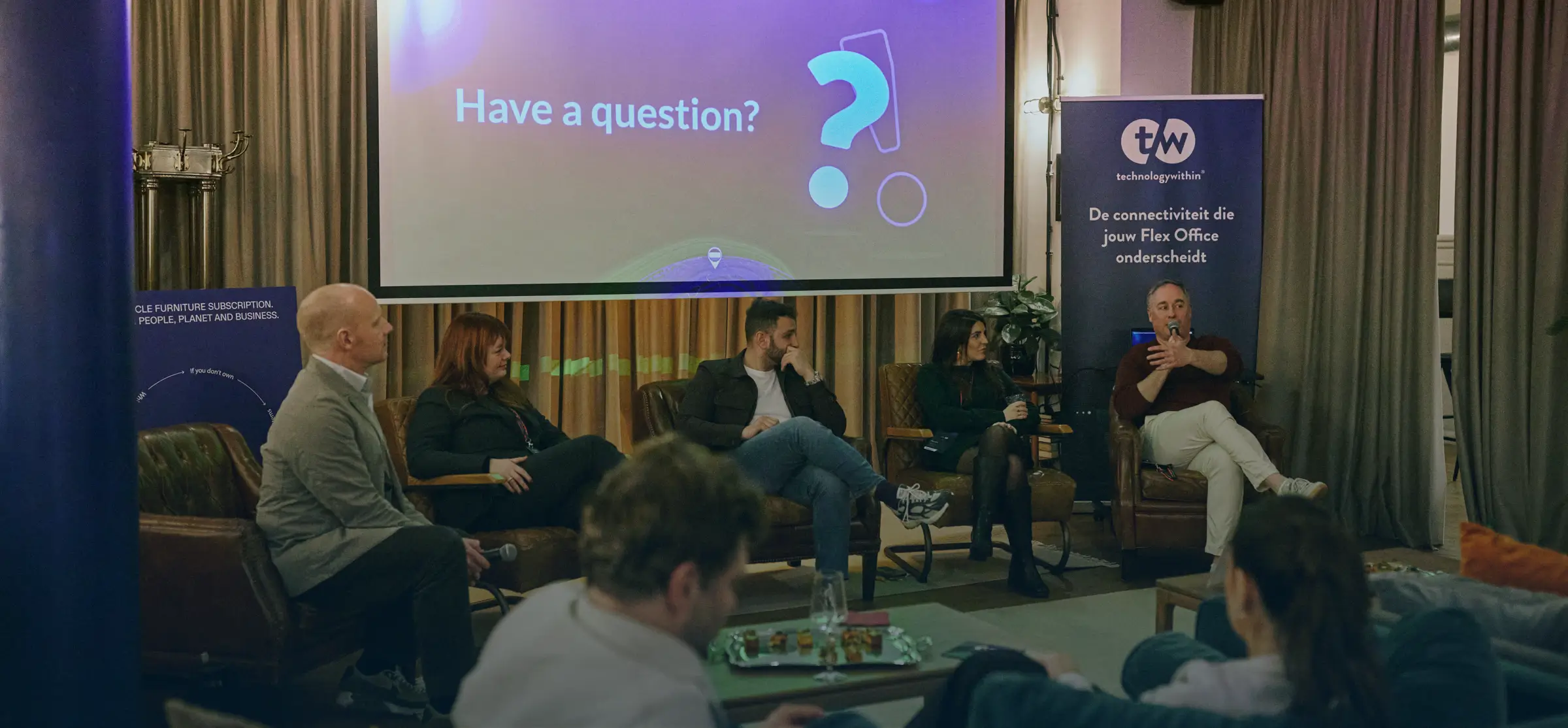
Who’s Got the Flex Factor? The Battle for Coworking Success in the Netherlands
Amsterdam is a fast-growing flex market. With strong ties to the UK and an internationally diverse talent pool, the Dutch…

Coworking Trends in 2026
With the new year upon us, it’s the perfect time to tackle some of the biggest questions driving the flexible…
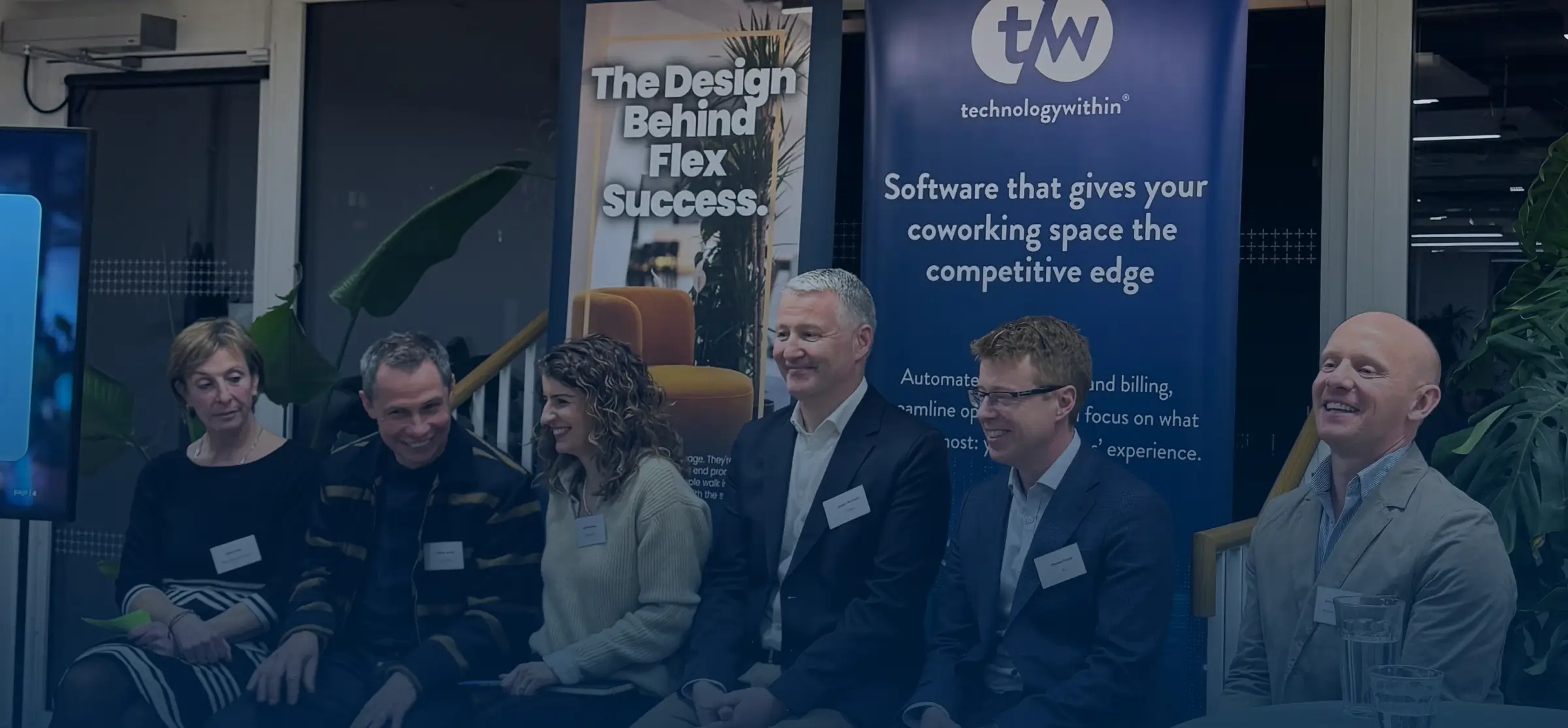
How to Succeed in Flex: Building the Next Phase Together
That message came through loud and clear at BE News Spotlight on Flex, an event proudly sponsored by technologywithin, alongside…
Subscribe to our newsletter
Connectivity and workspace management services that empower operators and landlords to grow